Bach’s English Suite No. 6, in D minor, is really fun to play. Movement 1 (Prelude) is written like an Adagio & fugue. Movement 6 is called Gavotte I. This is what I play on this video. This is a rhythmic French dance. The music is very joyful.The right hand is played with accents, and the left hand is played a bit like a cello. The way I play it, is done to make it swing. I do not copy any other pianist’s interpretation.
Jonas Karlsson – J.S. Bach – Gavotte I from English Suite No. 6
Recorded on September 9, 2026. Location: Stockesalen, Frösön /Sweden. The ornamentationI do, is not the one written in score, but I mostly follow my own instinct.
I discovered this arrangement of the USA National Anthem in 1998. Even if it is not very complicated, you can find Rachmaninoff’s greatness in it. I made a YouTube video, to show you how I play it. I play it kind of slow and loud. Recorded in Stockesalen on Frösön/Sweden. Date: July 9, 2026 Piano: Steinway & Sons
Rachmaninoff’s Epic Version of the USA Anthem – Jonas Karlsson
Pianist Jonas Karlsson – George Friedrich Händel – Passacaglia from Suite no. 7 in G minor– Recorded on August 11, 2026
The Passacaglia in G minor from George Friedrich Händel’s Harpsichord Suite No. 7 in G minor, HWV 432, was published in 1720. It is one of the most famous instrumental works of the Baroque era.
The reason Händel’s Passacaglia in G minor is so popular, is primarily that the entire work is built upon a beautiful chord progression. The value of this particular chord progression was recognized as early as Händel’s time. Today, the same chord progression can be found in famous pop songs.
I think this music sound better on a modern grand piano, than on a harpsichord. And there is no point playing it without sustain pedal, because using some sustain pedal makes the opening of the Passacagliga, and some of the variations sound much better. Secondly: Adding notes, ornaments, and things like that, adds absolutely nothing to this showpiece. Playing the entire piece with a steady pulse, without noticeable rubato, creates a far more hypnotic effect, than changing tempi during the composition.
The video was recorded on August 11, 2026. On this short video I play the beginning of the piece.
“Alexander Scriabin’s Prelude in C major, Op. 13, No. 1 is a short, expressive piano piece composed in Moscow in 1895. It is written during his early compositional period heavily influenced by Frédéric Chopin.”
That is the information AI gives you, when you Google. Butwhat do I think about it? I think it is one of Scriabin’s coolest piano compositions. It is not very complex, like some of his Etudes. But the music is powerful and a bit diabolic – but of course in a positive piano-romantic way.
Scriabin is one of the most fascinating piano composers ever. Often, he sounds like a russian Chopin. A man who knew how to write piano music, in a pianistic way.
Later in life, Scriabin wrote atonal music, in his own way. The music I love, is written earlier in his life.
I recorded this in October, 2024. I had forgotten that I recorded it, but I posted it on YouTube two weeks ago.
On June 18, 2026, I gave a piano concert on a Feurich grand piano, in Heliga Ljusets kyrka. (The church is located in Torvalla/Östersund – Sweden). A very nice concert. I really enjoyed playing. As always, I mixed musical styles.
The Swedish pianist Jonas Karlsson plays Liszt’s Liebestraum No. 3 in A-flat major, S. 541 / 3.Recorded in Stockesalen on Frösön (Sweden). Piano: Steinway & Sons. Date of recording: Mars 17, 2026
Here I am practising piano in Stockesalen/Frösön. As you can hear, I am not trying to make the Steinway sound like a harpsichord, or anything like that. I highlight the voices that feel most urgent. But without exaggerating. The pulse is stable. This is the Prelude from J.S. Bach’s – English Suite No. 6 in D minor. It is flowing like a river. I don’t believe in alot of Tempo rubato, while playing Bach.
This video is recorded on Mars 3, 2026, in Stockesalen – Frösön.
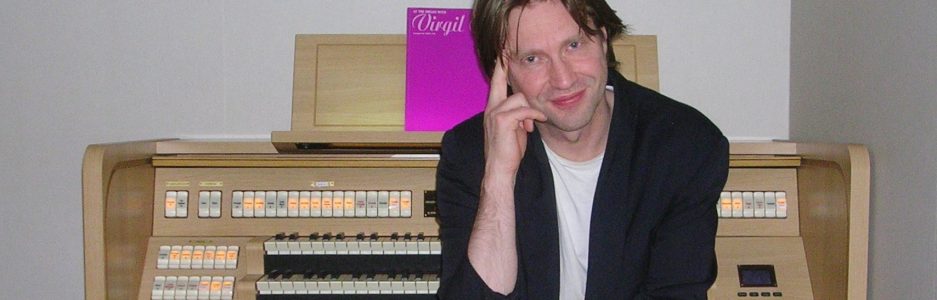
On February 7, 2026, I did a solo organ recital in Brunflo church. This time, I wanted to take the chance to play in front of the audience, so I prepared for the concert to be played on this Johannus Monarke organ. It is a high quality digital organ that I think was installed in the church in 2012. A very nice organ. The negative thing about this instrument, is that the sound in Johannus organs, is not as clear is in a pipe organ. And the keyboards makes virtuoso playing more difficult.
I did many improvisations at this organ recital. I played two of Bach’s organ chorales. And I played the three best organ works that I have composed myself. The audience was very pleased.
On this video, you can hear excerpts, from five of this concerts nine organ solos.
On this other video, you can hear the complete improvisation on “Jämtlandsången”. It is a two-part improvisation with a Prelude and and fugue-like finale.
Here is a new Chopin recording I made. The Prelude in E major, Opus 28 No. 9. I recorded this at the large Steinway grand piano in Stockesalen on Frösön/Sweden, on July 19, 2025.
On this recording I make a minimum of rubatos, but I am still being very careful not play the music too much like a pop song. This prelude sounds a bit like a pop hit.
I did another recital in Gamla kyrkan – Östersund/Sweden on Mars 26, 2025. I finally did my piano improvisation on Paganini’s Capriccio. My Paganini Variations. I had planned to improvise theese Paganini Variations for maybe 8 minutes. But there was not much time left at the end of the recital, so I had to do a shorter version.
I did this recital together with my singer Tobbe Edlund. He sang some well known Elvis hits, and evergreens, and I played four piano solos. Two improvisations, one of my own piano works, and some Beethoven.
Here is a video with piano solos from this concert.